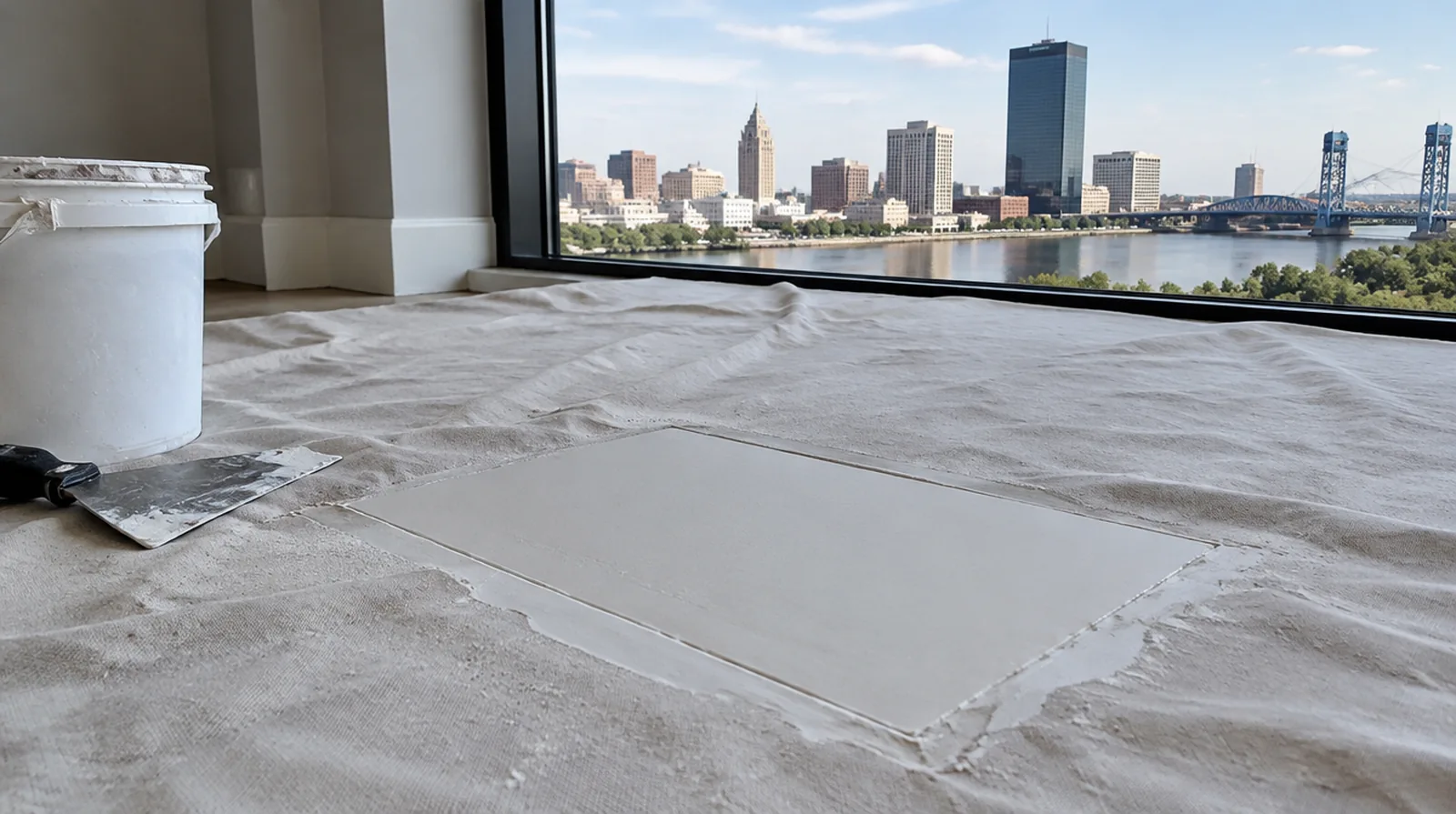
Protect adjacent surfaces
Fine gypsum dust can travel beyond the immediate patch unless floors and nearby furnishings are protected. The work plan should identify what needs moving and which room can remain in use. For a project involving a building manager, confirm access hours and protection requirements before promising a start date or a short completion window.
Feather beyond the opening
Concealing a patch perimeter requires a tapered finishing area wider than the opening itself. A broad blend reduces the ridge that otherwise appears when light travels across the wall surface. For a wall receiving a decorative covering, provide its preparation requirements early adequate for the drywall finish to support that product.
Prepare for primer
Fresh compound and existing painted drywall absorb coatings differently unless the repair receives suitable primer. Establish whether suitable primer is part of the repair or will be applied by another contractor. If occupancy must resume on a certain day, include the later primer and paint stages in the timetable as well as drywall installation and finishing.
Review with side lighting
A patch that looks flat from the doorway may still show a small hollow under a nearby window. Checking from more than one angle helps separate surface imperfections from differences in paint sheen. For a limited patch requiring substantial setup, assess the complete package of access and protection rather than relating cost only to the opening size.
Build thin finishing coats
Several controlled applications are generally easier to flatten than one deep deposit of joint compound. Each layer needs enough drying time before the next pass can be judged accurately. For walls beside bright windows, review a dry sample from an oblique angle as well as looking straight at the repaired surface.
Document recurring movement
A crack that repeatedly reappears could need the cause investigated before more cosmetic work. State any moisture or movement concerns that another professional must resolve ahead of the drywall repair. For a room that stays in use, set a workable boundary around construction while retaining the access people need for normal daily activities.
Handle small fastener marks
A bump over a fastener may reflect separation or movement at the panel support. Adding suitable fastening nearby may be necessary before the damaged spot receives finishing compound. For a wall receiving a decorative covering, provide its preparation requirements early adequate for the drywall finish to support that product.
Set the paint boundary
Even a well blended patch can remain noticeable when touched up with an aged or unavailable paint color. Repainting the full wall from corner to corner may give a more consistent appearance. For an older repair with no clear history, describe when the mark first appeared and whether it has changed through more than one season.
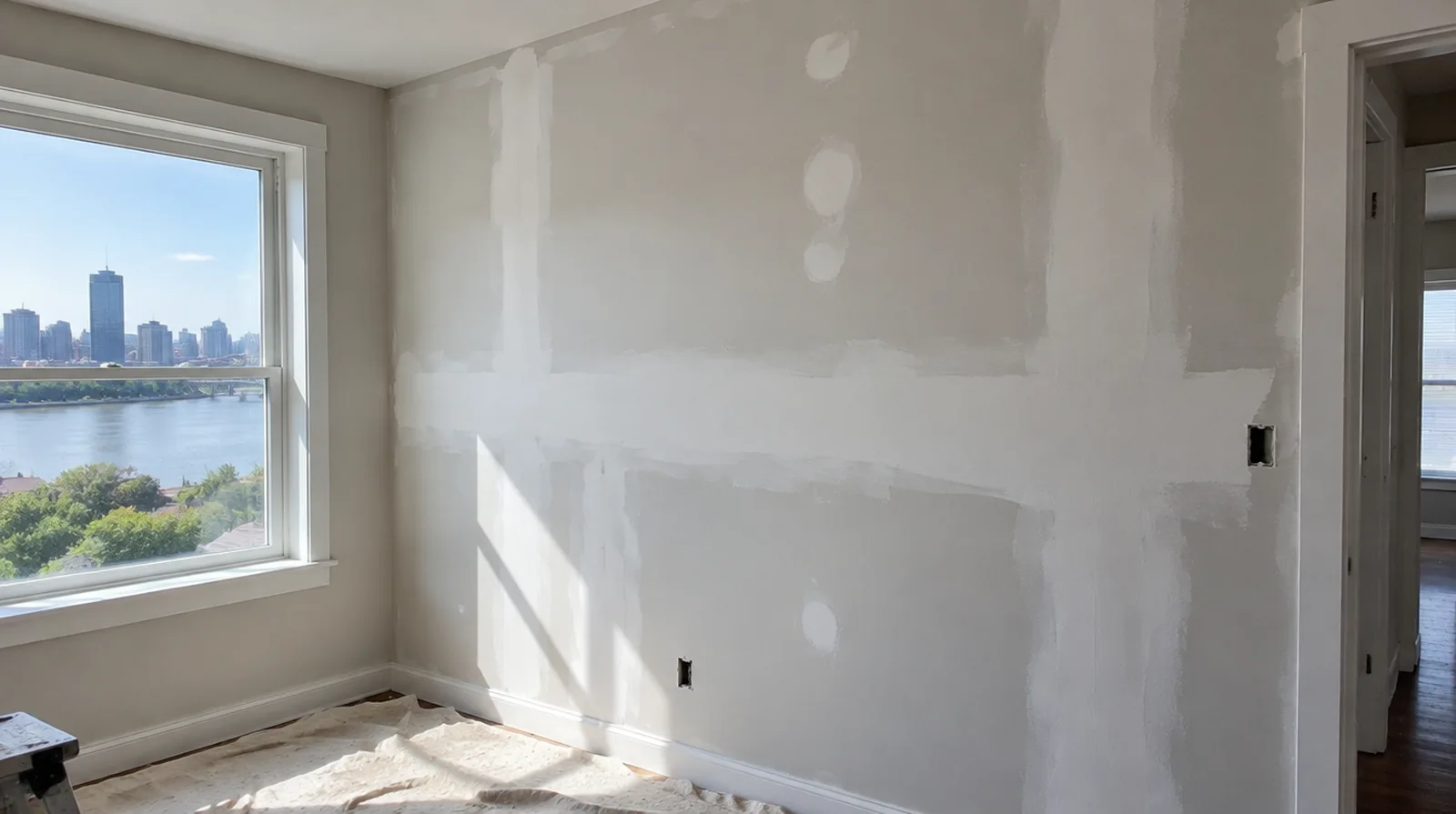
Choose the patch boundary
The repair must reach gypsum and paper that remain intact, rather than stopping at the noticeable outline of the hole. A tidy rectangular cut often provides stronger backing than following an irregular broken edge. At an edge beside built in furniture, state whether the obstruction will be removed or whether finishing stops at the section that can be reached.
Reinforce panel seams
The connection between old board and a patch needs reinforcing joint treatment. The tape belongs in a compatible bedding coat without trapped air or dry unbonded edges. When building management controls access, agree delivery hours and common area protection before committing to a start or finish date.
Project context in Toledo
Toledo repair planning benefits from a clear distinction between a ceiling mark and the condition of the board above it. Decide where furniture can go before the repair date.
Scope questions before finishing
Where several contractors share the renovation, identify the inspection and handover milestones that determine when each following stage can proceed.
For a distinctive existing pattern, retain a reference sample or detailed picture to make the matching discussion more specific.
If there is a fixed move in date, reserve sufficient time for the coating stages after drywall work instead of counting only the installation period.
For a surface that will receive wall covering, share the product requirements early so the finishing stage supports the planned decorative treatment.
Where existing floors will remain, specify protective measures and review the path used by panels, equipment and finishing tools.
At an edge beside built in furniture, state whether the obstruction will be removed or whether finishing stops at the section that can be reached.
If the problem developed after another renovation, explain which nearby materials or building systems changed before the damage became visible.
At a ceiling or wall containing fittings, assign removal and reinstatement duties for the affected devices before repair access is needed.
For a wall receiving a decorative covering, provide its preparation requirements early adequate for the drywall finish to support that product.
When a quote includes multiple visits, ask what happens during each stage and when the space needs to remain undisturbed between coats.
Where light reflects along the wall, inspect the complete plane instead of limiting the review to the edge immediately next to the repaired section.
If scheduling is the main concern, separate hands on labor from drying intervals instead of treating every visit as a full day of active work.
Explore the Toledo drywall overview for related options, or read the project planning information before arranging the next stage.
More planning details for Toledo
Explain whether there was a known leak, whether the area feels soft and whether earlier repairs have returned. Do not climb onto improvised supports to inspect a high surface; access equipment belongs in the work plan. With cold winter weather outside, the temperature maintained in the actual room can affect the finishing sequence.