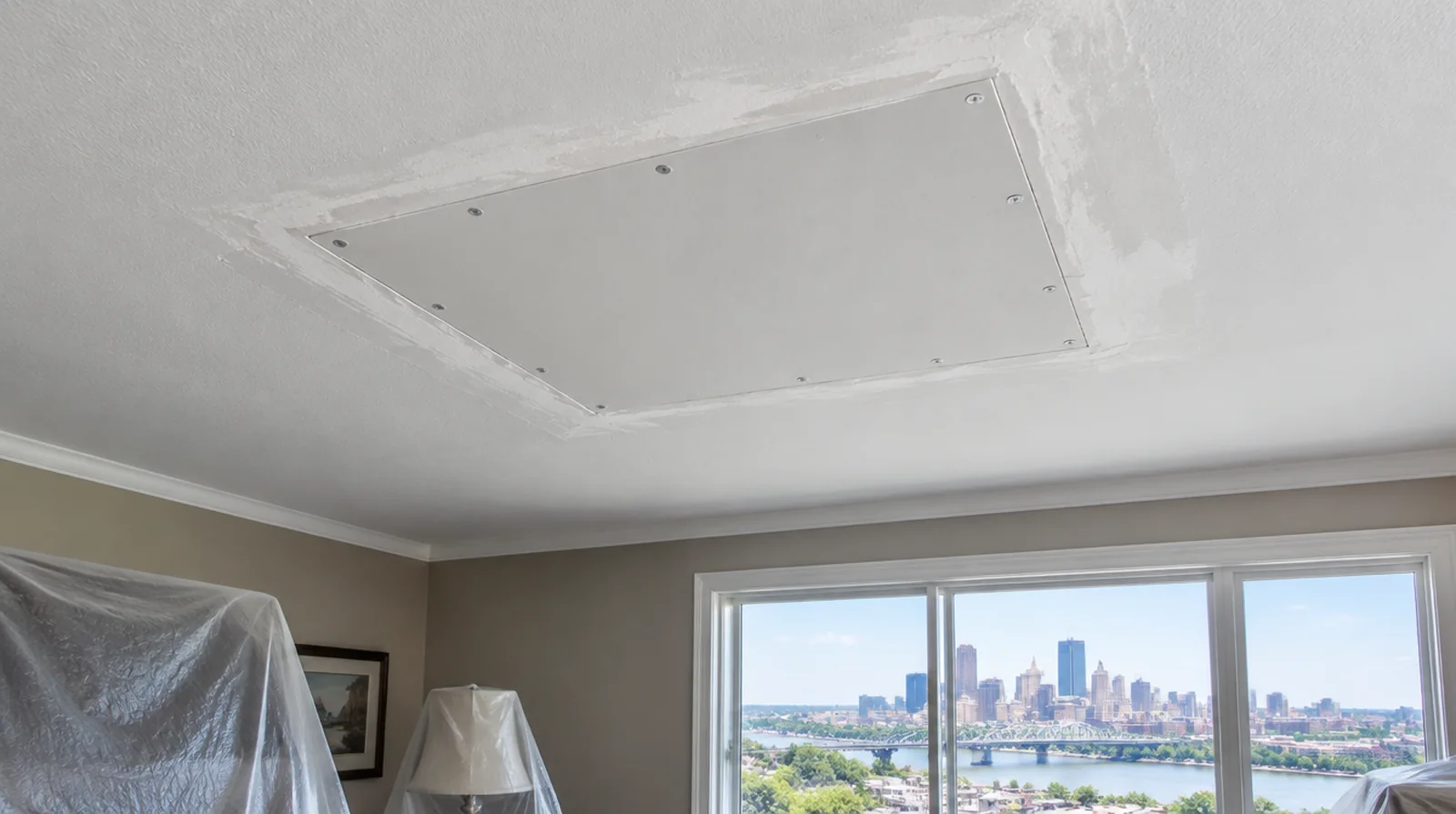
Identify the existing surface
Check whether the overhead finish is gypsum board, plaster or a mixture of older layers. The right repair depends on that actual construction rather than the color of its painted face. If the wall work belongs to a broader renovation, coordinate its order with flooring, cabinetry and trim instead of scheduling finishing in isolation.
Check the source of damage
A ceiling stain or soft area may be caused by plumbing or another moisture source above the interior. The cause needs resolution before cosmetic repair can reasonably be expected to last. When more damage could be hidden, ask how any added scope will be documented before extra material is removed or replaced.
Separate fixtures from board work
Handling lights, sprinkler fittings and air grilles could call for appropriate trades and building coordination. Assign removal and reinstatement responsibilities for any fitting that blocks safe repair access. At a repair beside an opening, allow clearance for moving board through the doorway and space to use the finishing tools effectively.
Review the room after drying
Once the coats are dry, view the ceiling from normal room positions and near its principal windows. Identify outstanding paint preparation while protection and access are still available. When a wall has repeated defects, keep a record of earlier repair attempts so a new assessment does not simply repeat an unsuccessful approach.
Add reliable backing
A ceiling patch needs fastening support on its edges instead of relying on compound to carry its weight. Matching the panel thickness helps avoid a visible step between old and new surfaces. For a room with restricted airflow, plan drying conditions alongside dust protection and the comfort of people occupying neighboring spaces.
Set the repainting scope
A small fresh white patch can stand out against an older ceiling even when the surface is level. Painting to a natural boundary may be preferable to touching up only the repair. Where a neat final edge matters, agree whether the finish ends against existing trim or whether that trim will be removed and replaced.
Cut back to sound material
Water softened gypsum and unstable edges do not provide a dependable base for a new patch. Cut to a stable boundary that also permits secure fixing and an effective finishing blend. For a project involving a building manager, confirm access hours and protection requirements before promising a start date or a short completion window.
Address isolated stains
Inactive discoloration may require a primer selected to block the remaining stain. Verify that the source is no longer active instead of treating primer as a remedy for damp material. Where a finished perimeter is prominent, decide whether trim stays in position or is removed before agreeing how the new surface meets that edge.

Plan overhead access
Ceiling height and furniture layout influence the platform and protection needed for safe working access. Delicate floors, bulky furniture and fittings may add more setup work than the patch dimensions suggest. If an independent painter completes decoration, agree the condition of the handed over surface and assign responsibility for small final corrections.
Discuss texture expectations
A smooth ceiling and a textured ceiling need differing finishing plans around the repaired section. A representative sample makes it easier to judge whether the original pattern can be blended locally. If the coating stability is unclear, assess which layers are adequately bonded and which should be removed instead of simply hidden beneath new material.
Project context in Toledo
Toledo repair planning benefits from a clear distinction between a ceiling mark and the condition of the board above it. Do not climb onto improvised supports to inspect a high surface; access equipment belongs in the work plan.
Scope questions before finishing
Where a neat final edge matters, agree whether the finish ends against existing trim or whether that trim will be removed and replaced.
For an older repair with no clear history, describe when the mark first appeared and whether it has changed through more than one season.
If the surface condition is uncertain, allow for an assessment that can distinguish stable material from layers that should not be covered.
If a room has only limited ventilation, discuss how the finishing materials can dry without disrupting comfort or spreading dust elsewhere.
If scheduling is the main concern, separate hands on labor from drying intervals instead of treating every visit as a full day of active work.
If the ceiling or wall includes fittings, identify the person responsible for removing and reinstalling each item before the work begins.
At an edge beside built in furniture, state whether the obstruction will be removed or whether finishing stops at the section that can be reached.
If occupancy must resume on a certain day, include the later primer and paint stages in the timetable as well as drywall installation and finishing.
If an independent painter completes decoration, agree the condition of the handed over surface and assign responsibility for small final corrections.
When the wall surface has strong reflected light, look at the full plane rather than judging only the narrow strip immediately beside the patch.
When concealed damage is possible, establish how additional findings and any proposed removal will be recorded before the scope changes.
If the project is part of a larger remodel, settle the sequence with flooring, trim and cabinet work before setting a final finishing date.
Explore the Toledo drywall overview for related options, or read the project planning information before arranging the next stage.
More planning details for Toledo
Explain whether there was a known leak, whether the area feels soft and whether earlier repairs have returned. With cold winter weather outside, the temperature maintained in the actual room can affect the finishing sequence. A ceiling over an occupied family space may need staged protection and a specific daily cleanup boundary.